
Eleventh Circuit Amends Rules on Extensions, Disclosures, and Admissions
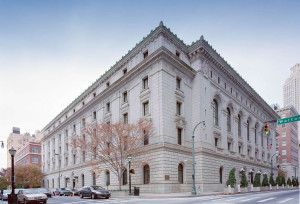
Eleventh Circuit Court of Appeals, Atlanta

Eleventh Circuit Court of Appeals, Atlanta

The 11th Circuit will now allow a first request for extension of time of up to 14 days (instead of 7) – without having to certify pursuant to 11th Circuit Rule 26-1 that the requestor conferred with opposing counsel about the extension – which can be granted by the Clerk on a telephonic request, so long as the Court hasn’t established a written briefing schedule. 11th Cir. R. 31.2. Any request for an extension greater than 14 days still requires consultation with opposing counsel and a written motion, and the first request must still be made at least 7 days in advance.

The Court also amended the rules for filing a Certificate of Interested Persons and Corporate Disclosure Statement (CIP) to not only require the appellant or petitioner to file a CIP within 14 days of docketing of the appeal and to complete the web-based CIP form the same day, but to require all other parties to file a response to the CIP within 14 days either indicating the CIP is correct or adding additional interested persons or entities. 11th Cir. R. 26-1(a). The rule now clearly states that failure to complete the separate web form will subject a party to delay of the case and possible sanctions. 11th Cir. R. 26-1(b); 26.1-5. The rule change also clarifies the parties that need to be identified in various kinds of cases, speaking specifically to including the identity of the victims in criminal appeals, and the debtor, creditor’s committee members, and any entity which may be affected by the decision in bankruptcy appeals. 11th Cir. R. 26.1-2. Any amendments to the CIP must be brought to the Court’s attention, both in briefs and through the web-based CIP. 11th Cir. R. 26.1-4.

Finally, the attorney admission rules now impose a continuing obligation to notify the Court if an attorney’s status with any other bar lapses, and makes clear that attorneys applying for admission to the bar or to appear pro hac vice must be in good standing elsewhere. 11th Cir. R. 46-1, 46-4; 46-7. Renewal fees may now be paid online.

Download a copy of the new rules here. The Court’s summary table of the rule changes is available here.
Oral Argument: Peterson v Flare Fittings

I’ve talked about how to prepare for oral argument before, but I’ve never shared an actual oral argument video on this site. DPW Legal now has a YouTube Channel — please subscribe! — and I am pleased to present as our first video the oral argument in Peterson v. Flare Fittings, a case which I won before the Fifth District Court of Appeal back in October. As with all oral arguments, it’s a long video, so get your popcorn ready, or have about 40 minutes to spare. There are notes in the video on how to skip to my argument, if you are so inclined, though it’s helpful to see both sides.

A few thoughts on argument:

  • You’ll notice a lot of discussion about an issue that never even got mentioned in the opinion — the due process issues surrounding the timing of the summary judgment hearings. The Court didn’t need to talk about that issue to rule in my client’s favor — and probably would have ruled against him on that issue, since it was an abuse of discretion standard — so just didn’t mention it at all.
  • There were three Appellees, and they did not do a good job of watching their time. One Appellee did not get to argue at all.
  • At least twice I made sure to ask the Court if they had specific questions they wanted addressed, and when I had made my point, I relied on my written materials and sat down. Never feel the need to talk just to fill space during Oral Argument. Get your points in, answer the judges’ questions, and sit down.

The case again is Peterson v. Flare Fittings, No. 5D13-2235 (Oct. 9. 2015) [.pdf]. For my analysis of the decision, see the original blog post. And you may link to the argument at https://youtu.be/sIME2a5NUv4.

Plaintiffs Must Overcome Defenses to Win Summary Judgment

Another appellate victory for  Dineen Wasylik and DPW Legal, overturning an improper grant of summary judgement in a foreclosure appeal.

Another appellate victory for
Dineen Wasylik and DPW Legal,
overturning an improper
grant of summary judgement
in a foreclosure appeal.

We are proud to report our firm racked up another appellate win yesterday — DPW Legal secured the reversal of summary judgment against our clients in a mortgage foreclosure action. In this case, the Bank before the trial court won summary judgement, even though its summary judgment motion made no mention of the defendants’ numerous affirmative defenses set out in their answer.

On appeal, we correctly pointed out that Rule 1.510 Requires that a motion for summary judgment “shall state with particularity the grounds upon which it is based and substantial matters of law to be argued,” as well as the myriad of cases that require plaintiffs to affirmatively overcome each and every defense before they can earn summary judgment. The appellate court ultimately agreed, and reversed the summary judgment, explaining:

It is true that the Bank did submit a response to an affidavit regarding the Paragraph 22 notice, disputing the Amstones’ affidavits that the notice had not been received or was deficient. But the Bank did not address the affirmative defenses in its motion for summary judgment. And at the hearing, the Bank’s counsel simply asserted that “the Affirmative Defenses were dealt with.” The Amstones’ counsel responded that the Bank had failed to refute all of the affirmative defenses…The Amstones’ counsel also emphasized that the affidavits regarding the Paragraph 22 notice crated a factual dispute that needed to be resolved. The court made no findings regarding any of these defenses. Accordingly, genuine issues of material fact remained, and summary judgment should not have been granted.

In our view, this was a case where strong advocacy at oral argument made a huge difference. What is not clear from the opinion is that the Bank argued that the defendants had waived this issue by failing to argue it on the record below, and the court seemed to want to buy that waiver argument. At oral argument, we were able to refute the waiver argument with citation directly to the proper part of the record showing why it was not waived. We’ve ordered the oral argument video, and will further expound on the important preservation issues in a later post, when we can share the video. But in the meantime, the lesson to be learned is that at the trial level, preservation is key, and at the appellate level, knowing your record cold is key (see my prior post on preparing for oral argument).

Attorney Ralph Fisher acted as able trial counsel, and ensured the issues were preserved on appeal.

The case is Amstone v. The Bank of New York Melon, No. 2D14-5480 (Jan. 6, 2016) [.pdf].